
Union County Criminal Court Records
A criminal court record is the court-level file, not just the accusation. It can begin with a complaint or preliminary court record, then continue through the Clerk of Courts once charges move into the Court of Common Pleas. The record may show arraignment, the formal information, motions, orders, plea entries, trial events, disposition, sentence, costs, restitution, bail, and probation events. For a closer look at the charge list itself, use arrest records and court charges; for other record types, use Union County court records.
Union County is in the 17th Judicial District with Snyder County. The Court of Common Pleas handles criminal matters of general jurisdiction. Magisterial District Courts handle preliminary arraignments, preliminary hearings, summary matters, and some traffic or lower-level case events before a case moves forward. The Union County Court of Common Pleas page identifies the court's local role, court administration contact, judges, weekly calendar link, local rules, and UJS portal access.
Search Union County Criminal Cases
Use Pennsylvania UJS Case Search for public criminal docket sheets. Search by participant name, docket number, OTN, complaint number, SID, or date filed. Filter by Union County when possible. A known CP criminal docket number is the most precise route. The OTN can help connect a charge event to later criminal docket activity when that number appears on charging papers.
- Open UJS Case Search and select participant name, docket number, OTN, or complaint number.
- Filter by Union County or the Snyder/Union 17th Judicial District.
- Open the docket sheet that matches the defendant, case type, filing date, and court.
- Review charges, plea entries, disposition, sentencing, costs, restitution, counsel, and scheduled events.
- Request a certified copy from the Clerk of Courts when an official record is needed.
The Union County District Attorney page is central to prosecution decisions in criminal cases.
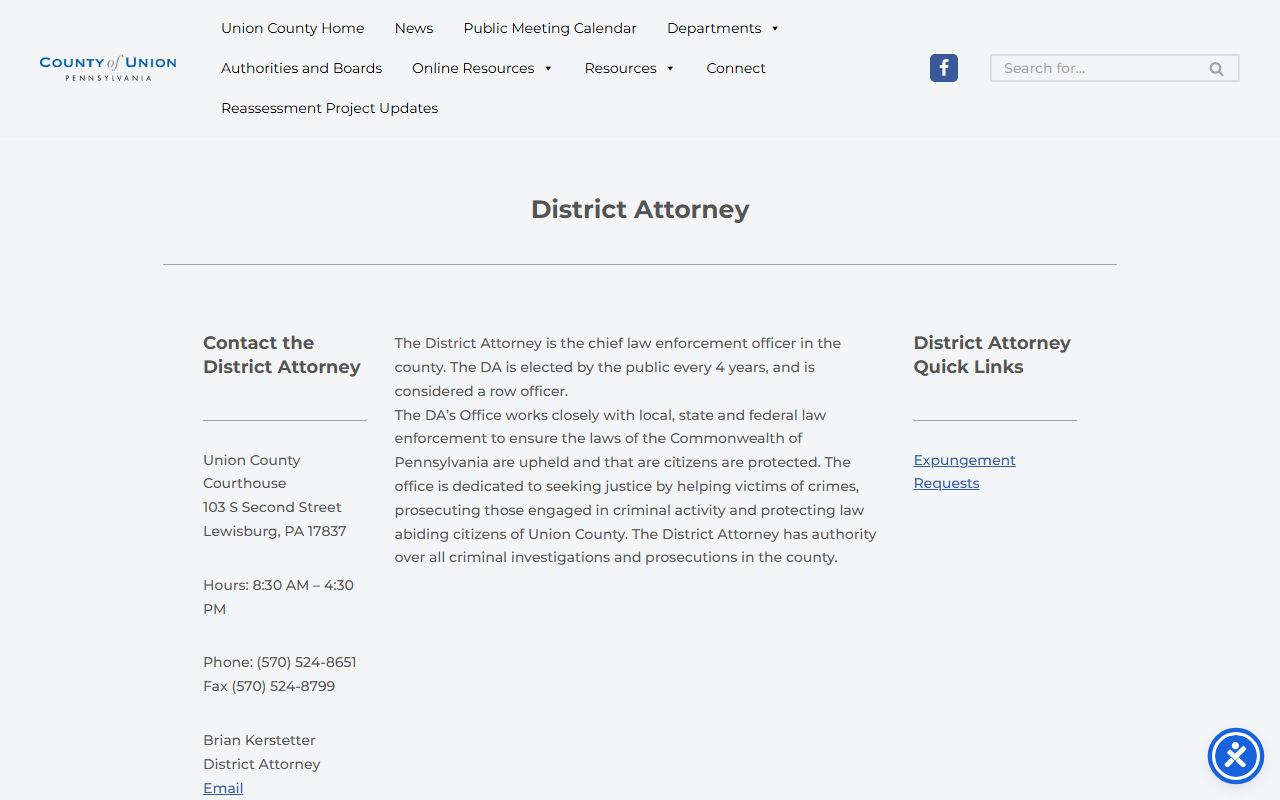
That prosecution role explains why the criminal case file may change after the first court appearance.
Criminal Case Stages
Criminal docket entries should be read in sequence. Early entries may show the complaint, preliminary arraignment, bail, and preliminary hearing. If charges are held for court, Common Pleas entries may show formal arraignment, motions, continuances, plea events, trial events, disposition, sentence, costs, restitution, and probation. The public docket is a status trail. It is not a complete investigative file.
Case flow: Charges Filed › Arraignment › Pretrial / Motions › Plea or Trial › Disposition › Sentencing
| Stage | What Happens |
|---|---|
| Charges filed | The criminal complaint or later information lists alleged offenses, statutes, grades, and related identifiers. |
| Arraignment | The defendant is advised of charges and rights, and plea or scheduling events may appear. |
| Pretrial / motions | Attorneys file requests, orders are entered, hearings are scheduled, and continuances may occur. |
| Plea or trial | The case may resolve by plea, verdict, dismissal, acquittal, or other disposition. |
| Sentencing | The docket may list jail, probation, fines, costs, restitution, treatment, or payment plans. |
What Criminal Records Show
Union County criminal court records can include field-level details that are easy to misread. A charge is an allegation. A disposition is the result for a charge or case. A sentence is the consequence imposed after a conviction or plea. Costs and restitution are financial entries. PAePay eligibility can appear in some public payment contexts, but limited-access cases may not be payable online because they are not publicly visible.
| Field | What It Shows |
|---|---|
| Case number | The criminal docket identifier, often using a CP criminal format with county, case type, sequence, and year. |
| Defendant | The person charged, plus counsel entries when public. |
| Charges | Offense description, statute, grade, offense date, OTN, and later charge status. |
| Plea | How a defendant responded to a charge when entered on the docket. |
| Disposition | The result, such as guilty, not guilty, dismissed, withdrawn, or other case-specific outcome. |
| Sentence | Jail, probation, fines, costs, restitution, treatment, or other ordered terms. |
| Events | Hearings, motions, continuances, orders, appeals, and payment plan activity. |
Charges vs. Convictions
Criminal court records often list both allegations and results. A person can be charged and later have a charge dismissed, withdrawn, reduced, amended, or resolved by acquittal. A conviction requires a guilty plea, verdict, or other legally recognized finding. That difference matters when reading Union County criminal records because a docket can preserve charge history even when the final result is not a conviction on every count.
| Point | Charge | Conviction |
|---|---|---|
| Meaning | An accusation filed in court. | A final result based on plea or verdict. |
| Timing | Appears early in the case. | Appears after disposition. |
| Record risk | May remain visible unless restricted by law or order. | May affect sentence, costs, supervision, and background records. |
DA and Defense Records
The Union County District Attorney is Brian Kerstetter. The office is described by the county as the chief law enforcement office for county prosecutions, working with local, state, and federal law enforcement and holding authority over criminal investigations and prosecutions. The staff page lists the District Attorney, First Assistant District Attorney, Assistant District Attorneys, and administrative/legal staff.
The District Attorney staff page documents the local prosecution team.
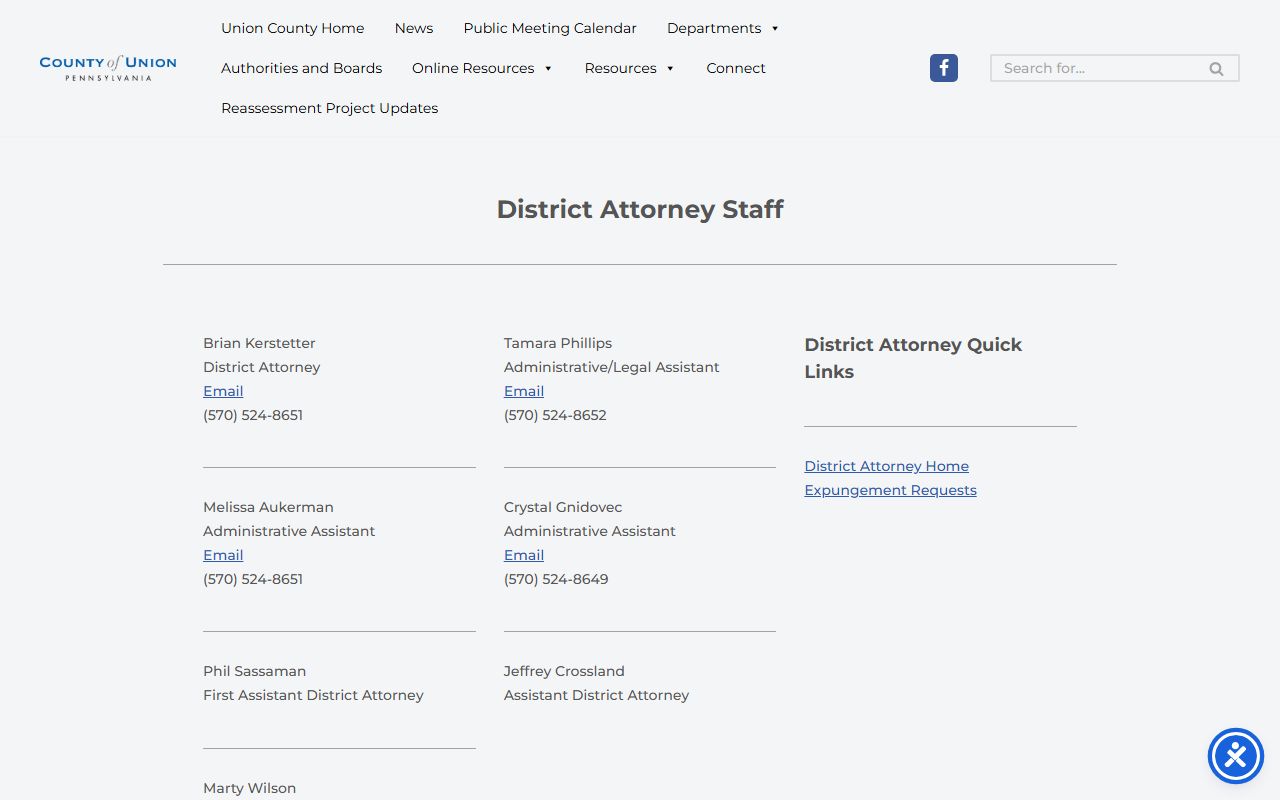
Those office roles help explain why criminal docket records may reflect prosecutor-filed amendments or plea negotiations.
The Union County Public Defender page says an applicant may obtain an application by phone, web form, mail, or in person. The application must be complete, dated, signed, and submitted with appropriate verifications. After processing, the applicant receives approval or denial by letter.
The Public Defender page is the local source for eligibility workflow.
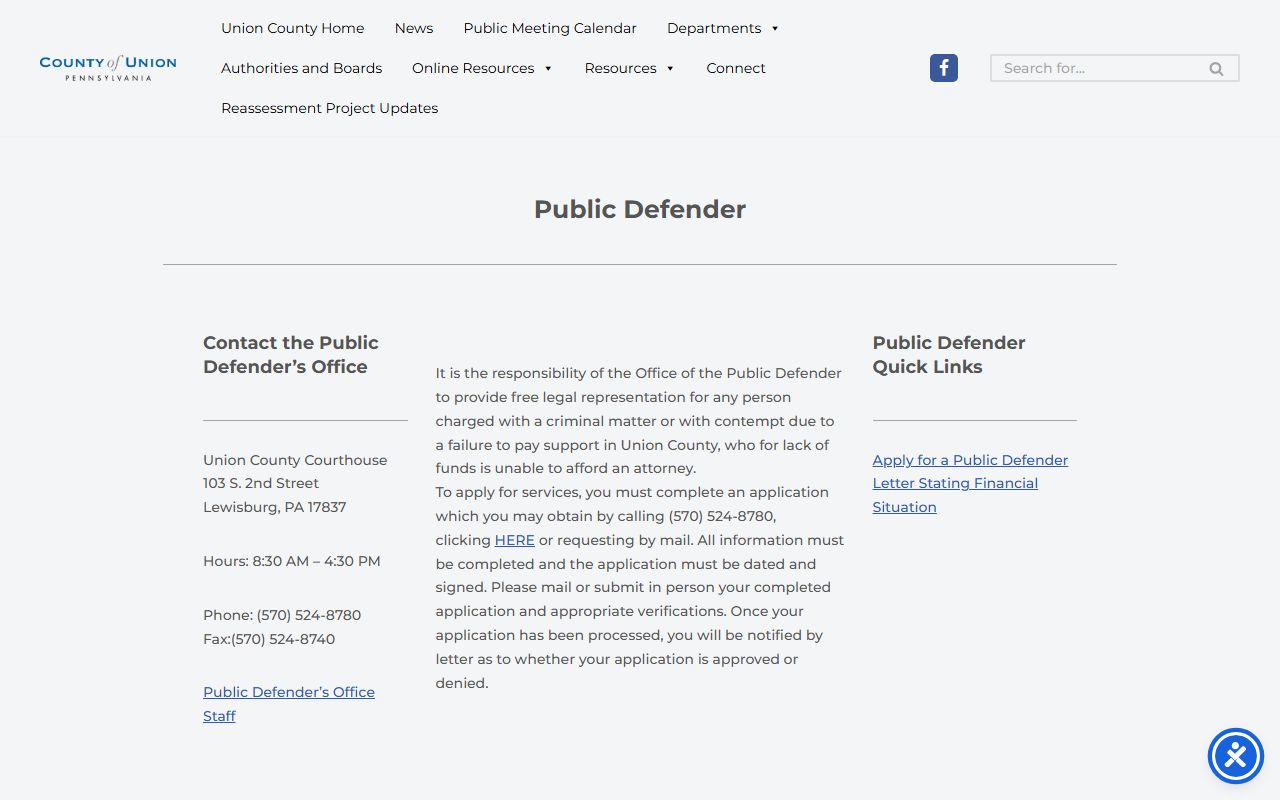
Defense representation can affect docket entries for appearances, motions, continuances, plea hearings, and sentencing.
Public Access to Criminal Records
Public criminal docket access is governed by the UJS Case Records Public Access Policy and Pennsylvania criminal history statutes. UJS dockets are not the same as a Pennsylvania State Police criminal history check. 18 Pa.C.S. Section 9121 addresses dissemination of criminal history record information by Pennsylvania State Police and criminal justice agencies.
18 Pa.C.S. Section 9121 is important for background-record context.
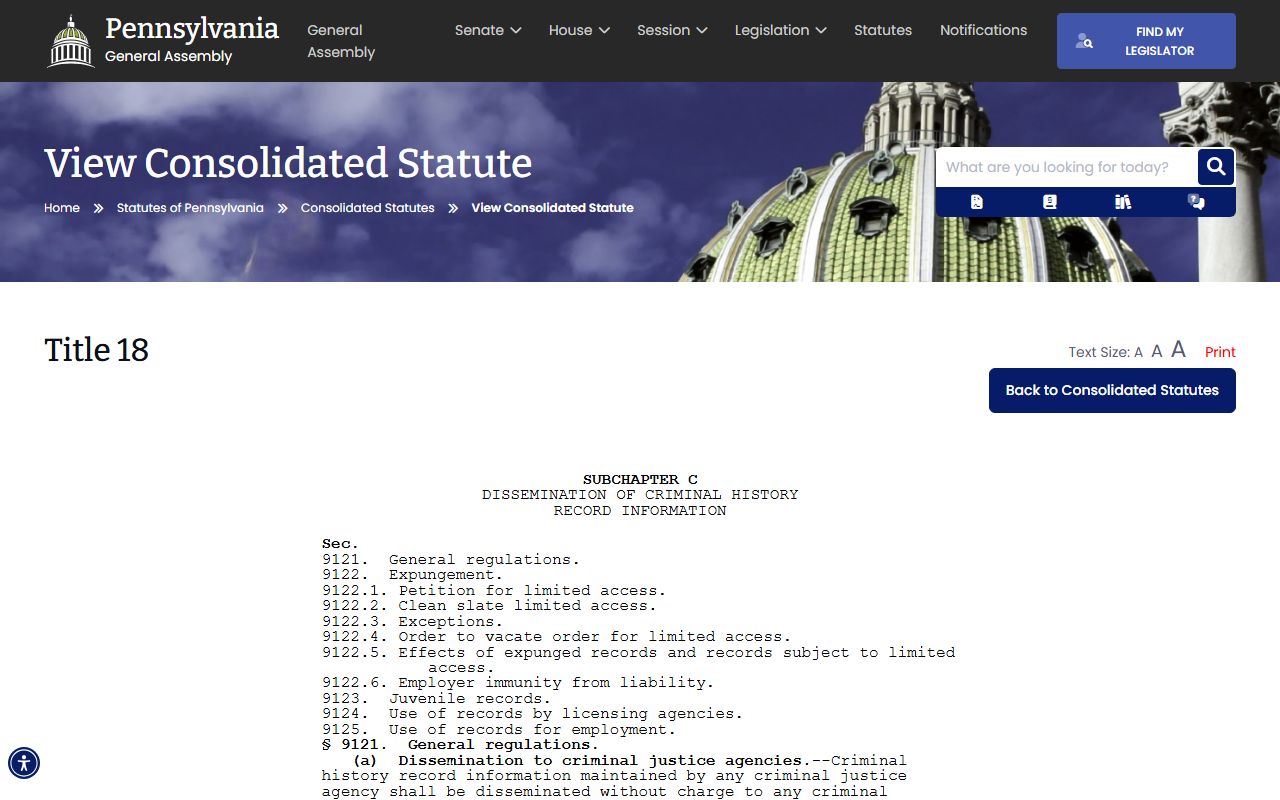
That law is one reason a public docket search should not be treated as a certified criminal history report.
Key Statutes:
18 Pa.C.S. Section 9122 addresses expungement eligibility for certain criminal history record information.
18 Pa.C.S. Section 9122.1 addresses petitions for limited access.
18 Pa.C.S. Section 9122 is separate from ordinary docket lookup.
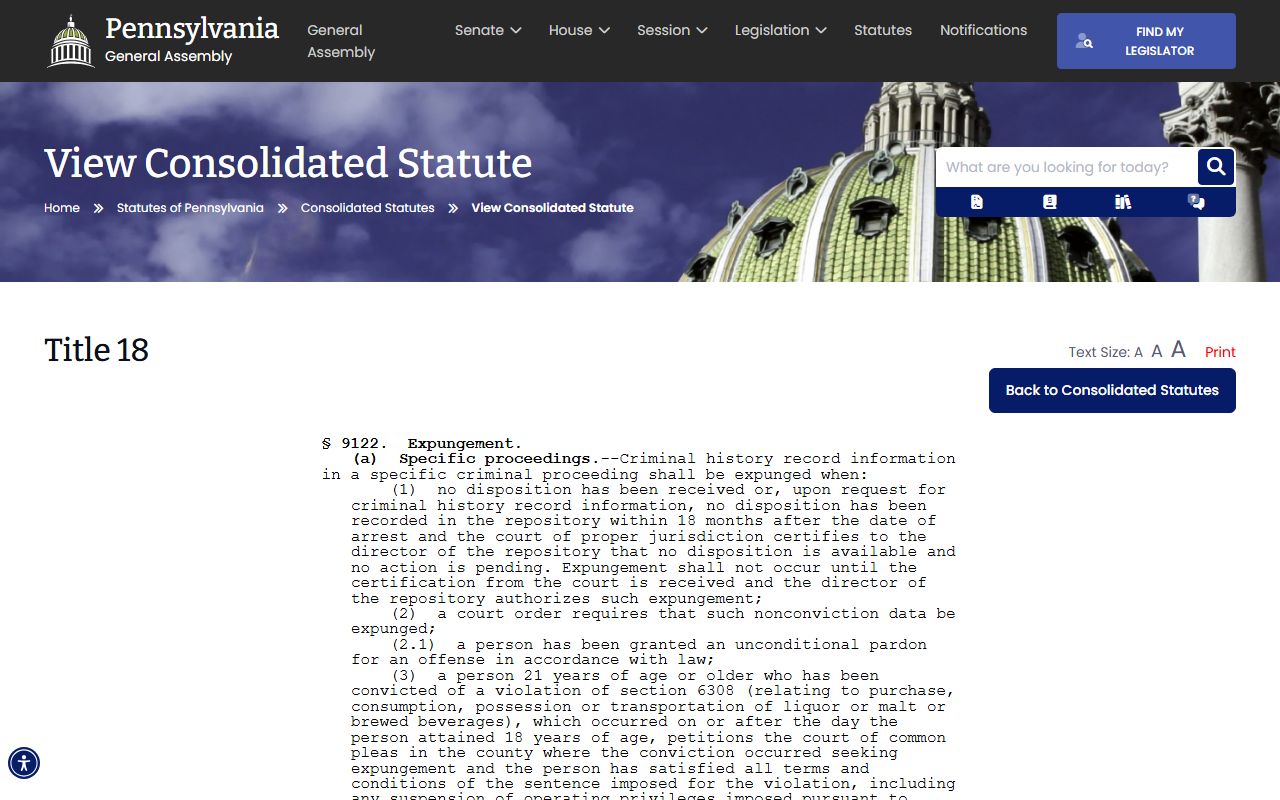
Expunged records may no longer appear in public searches when the order has taken effect.
18 Pa.C.S. Section 9122.1 can restrict public visibility while preserving access for criminal justice agencies and other authorized users.
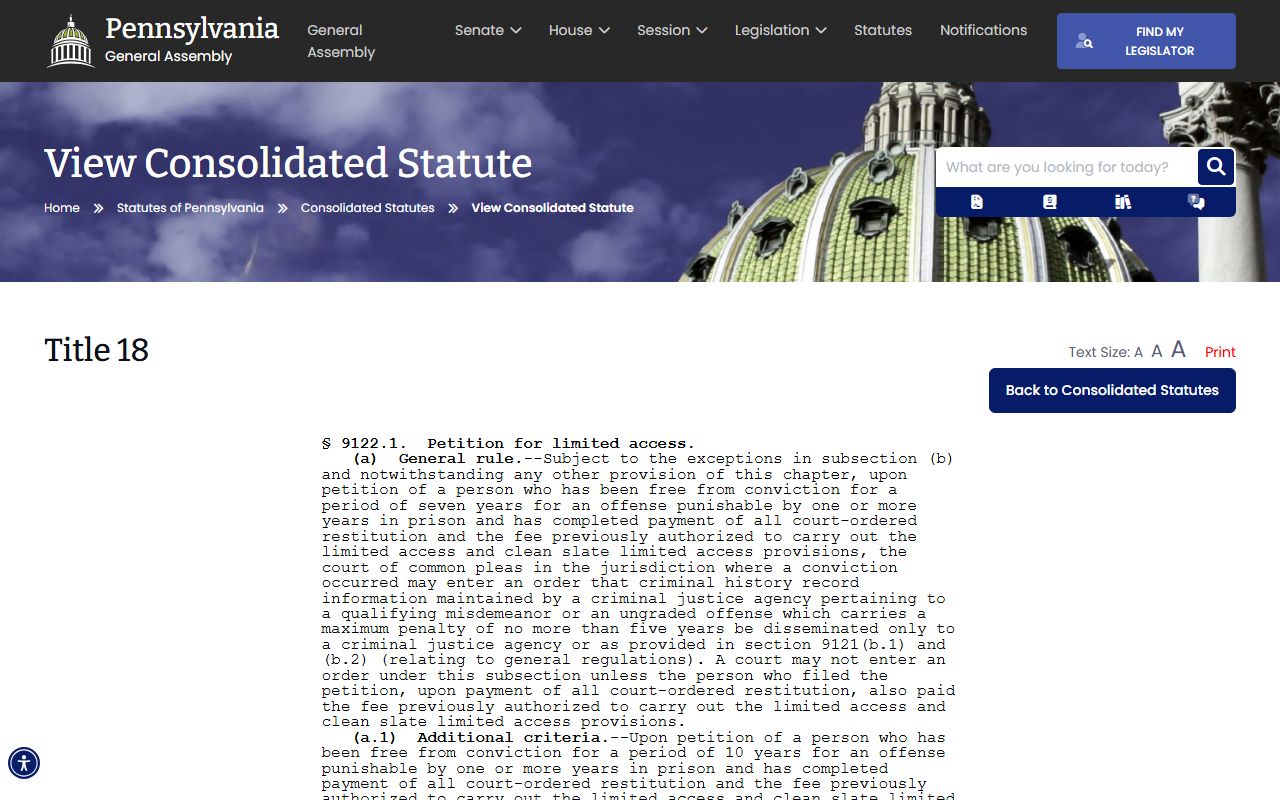
That distinction is key when a person expects a docket to appear but the record has been restricted.
Sealed vs. Expunged Records
Restricted criminal records require careful reading. Pennsylvania research for Union County identifies expungement, limited access, juvenile restrictions, and UJS confidentiality rules as the main limits. Juvenile court files and juvenile law-enforcement records are restricted under 42 Pa.C.S. Sections 6307 and 6308. Sealed or expunged records should not be expected to appear in an ordinary public search.
| Point | Limited Access / Sealed | Expunged |
|---|---|---|
| Public view | Usually removed or hidden from ordinary public view. | Eligible criminal history record information is removed or destroyed as ordered. |
| Agency access | Criminal justice agencies or authorized users may retain access. | Access is much narrower and depends on the expungement order and law. |
| Local step | Identify the docket and filing requirements through the Clerk of Courts. | Confirm eligibility and petition requirements under Pennsylvania law. |
Restricted Criminal Records
Restricted records include juvenile delinquency and dependency records, sealed cases, expunged matters, limited-access records, protected personal identifiers, and confidential documents. Union County filing rules require confidential information forms or confidential document forms where UJS policy applies, plus a Certification of Compliance attached to filings. For custody status, use inmate records; for active warrant status, use warrant records.
Important: Public criminal court docket searches are not FCRA consumer reports and are not PSP certified background checks.