
Union County Arrest Records and Charges
Union County arrest records document the custody side of a criminal event. That may include who was arrested, the agency involved, and the booking or jail contact path, but the official county jail page did not publish a searchable roster during research. For custody status, use Union County inmate records, the jail phone channel, PA VINE, or the Pennsylvania DOC locator for state-sentenced inmates and parolees.
Court charges after arrest are different. They are the allegations filed through a complaint, information, or other charging document and then tracked through the courts. The charge record can show offense labels, statute sections, grading, OTN, bail events, preliminary hearing status, amended charges, dismissed charges, pleas, and final disposition. The full case outcome belongs with Union County criminal court records.
Find Union County Arrest Records
For charge tracking, start with Pennsylvania UJS Case Search. Search by participant name, docket number, complaint number, OTN, SID, date filed, or citation number if the matter is a traffic or summary case. For the booking side, the research did not locate an official searchable Union County jail roster. Call Union County Jail or use custody notification systems rather than relying on third-party jail pages.
- Search UJS by name, OTN, complaint number, docket number, or citation number.
- Filter by Union County or by the Snyder/Union 17th Judicial District.
- Open matching criminal or MDJ docket sheets and review the charge list.
- Check whether each charge is pending, amended, dismissed, held for court, pleaded, sentenced, or otherwise disposed.
- Contact the Clerk of Courts, District Attorney, Public Defender, Sheriff, or jail only through the channel tied to the specific question.
The charge record is a court record, while jail status is a custody question. No official Union County Sheriff mobile app was located in the official source set, so app-only arrest or warrant features should not be assumed.
Charges After Arrest
After an arrest, a charge can first appear in a criminal complaint or lower-court proceeding. If charges move forward, the District Attorney may file or pursue formal charges in Common Pleas. The Union County District Attorney, Brian Kerstetter, is the county official identified in research as the chief law enforcement officer for prosecutions and criminal investigations. The office works with local, state, and federal law enforcement.
| Document | Usual Function | Union County Record Context |
|---|---|---|
| Complaint | Starts or supports the first court charge record. | May appear with complaint number, OTN, MDJ events, bail, and preliminary hearing entries. |
| Information | Formal prosecutor filing in Common Pleas. | Can show charges that proceed after the preliminary stage. |
| Indictment | Grand jury charging document where used. | Less common in ordinary local docket review, but still a charging-document category. |
That office role helps explain why a filed charge can later be changed, reduced, dismissed, or resolved by plea.
Charge Status in Union County
Charge status can change many times before a case ends. A docket may show an initial offense, an amended grade, a dismissed count, a nolle prosequi entry, a guilty plea on one count, and no conviction on another. Read the disposition for each charge rather than assuming the first charge list is the final result.
| Status | What It Means |
|---|---|
| Pending | The charge remains open and no final disposition has been entered. |
| Held for court | The preliminary stage allowed the charge to move to Common Pleas. |
| Amended / reduced | The charge description, grade, or count changed after filing. |
| Dismissed / withdrawn | The charge did not continue to conviction in its filed form. |
| Nolle prosequi | The prosecutor declines to proceed on that charge, subject to court rules and case context. |
| Sentenced | The charge ended in a conviction or plea with a sentence entry. |
Charges vs. Convictions
An arrest record and a court charge record do not prove a conviction. A charge is an accusation filed in court. A conviction is the result of a guilty plea, verdict, or other legally recognized final finding. Union County dockets can preserve both the original accusation and the final result, so readers should check disposition fields before drawing conclusions.
| Point | Charge | Conviction |
|---|---|---|
| Meaning | Filed allegation after arrest or complaint. | Final finding based on plea or verdict. |
| Where seen | Complaint, information, MDJ docket, or Common Pleas docket. | Disposition and sentence sections of the docket. |
| Possible outcome | May be amended, reduced, dismissed, withdrawn, or held for court. | May lead to sentence, probation, fines, costs, and restitution. |
Warrants, Bail, and Custody
Arrest-to-charge records may connect to warrants and bail events. The Union County Sheriff's Office publishes an official active warrant list and a tip form, while UJS docket sheets may show court events related to bench warrants, bail, hearings, failure to appear, or payment issues. The Sheriff's Office is led by Sheriff Scott W. Hahn, with office contact information published on the official sheriff site.
The Union County warrant records page is the better place for warrant-specific checks. Warrant entries may be related to arrest records, but a warrant list is not the same as a final criminal case disposition.
Note: Confirm warrant or surrender procedure with the issuing court, sheriff, or an attorney before acting on a web listing.
Juvenile Arrest Record Limits
Juvenile records are not ordinary public arrest records. 42 Pa.C.S. Section 6307 restricts inspection of juvenile court files. 42 Pa.C.S. Section 6308 restricts juvenile law-enforcement records. These limits affect arrest information, court charge records, and online docket visibility.
42 Pa.C.S. Section 6307 is a key public-access limit.
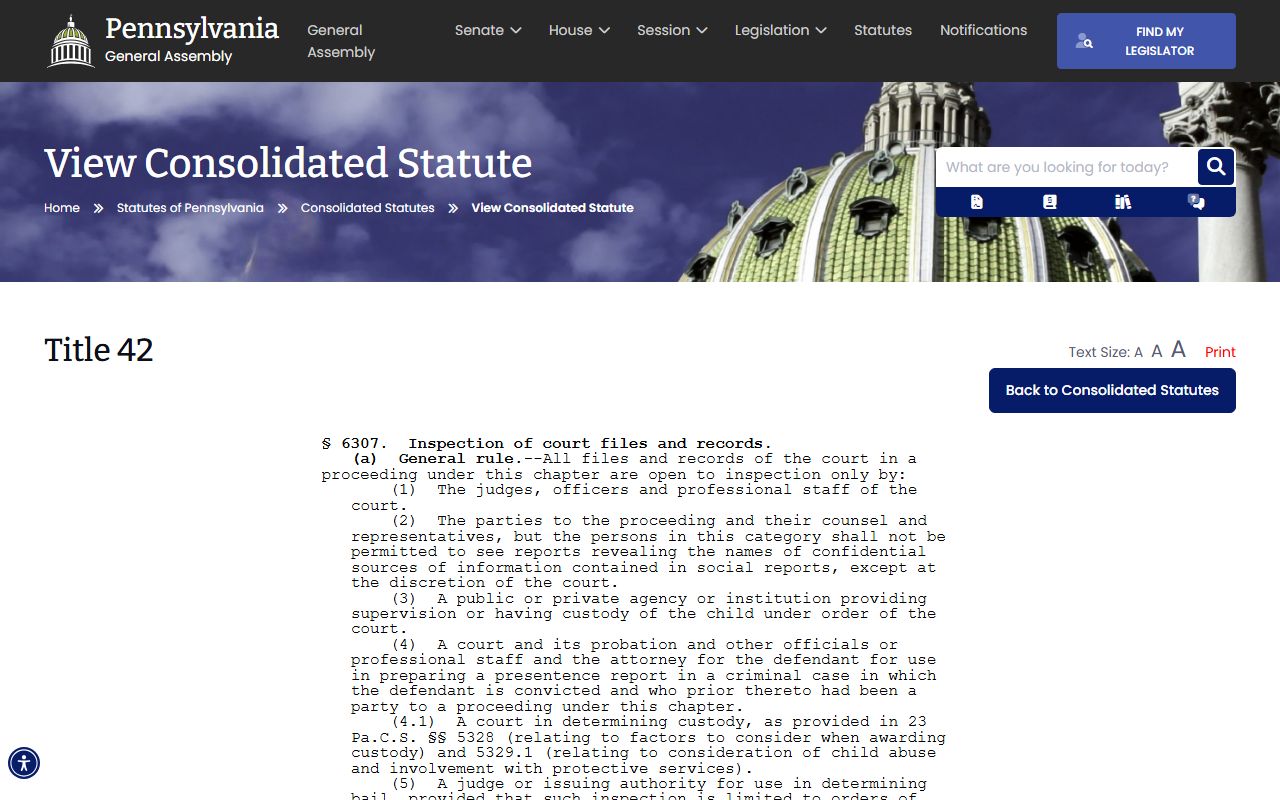
Juvenile case records may be limited to parties, counsel, agencies, and court-authorized requesters.
42 Pa.C.S. Section 6308 sets separate access limits for juvenile law-enforcement records.
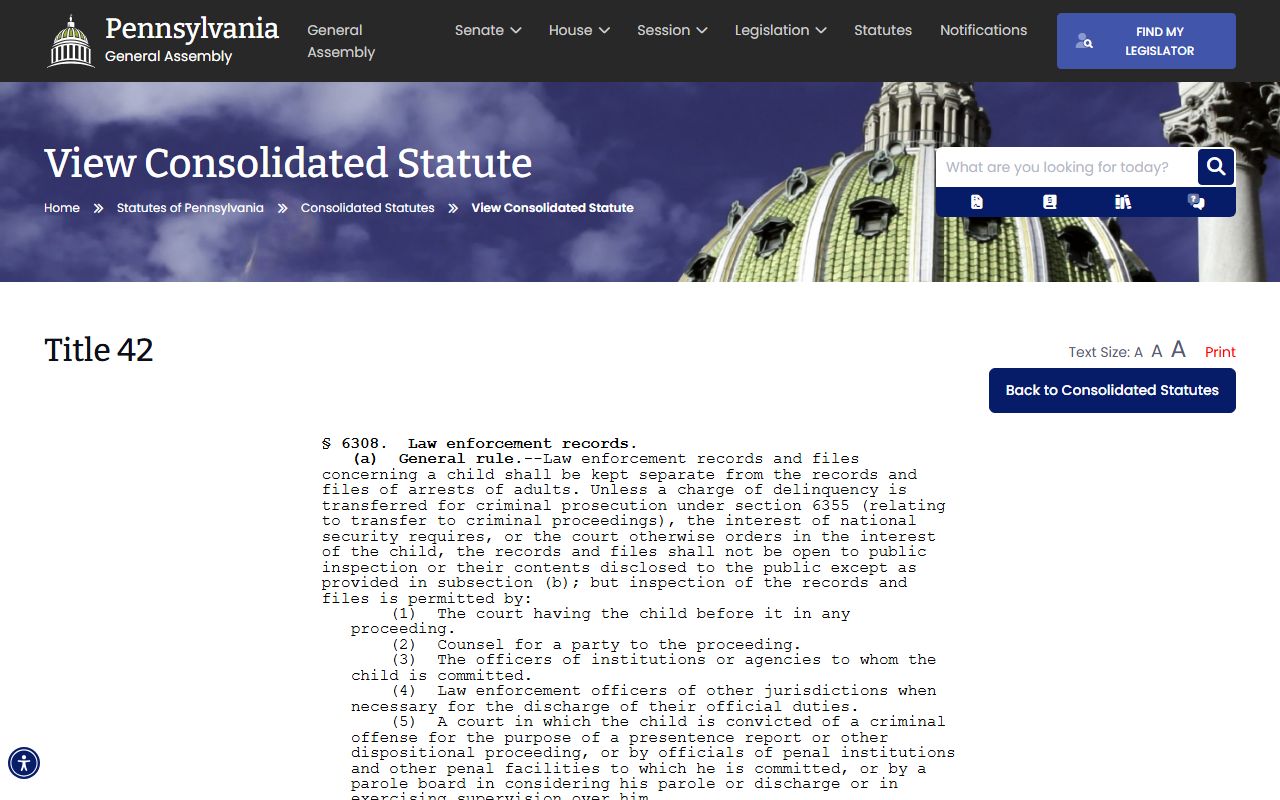
Those limits are why an arrest-related event may not appear in a public search even if a law-enforcement record exists.
Sealed vs. Expunged Records
Some arrest and charge records can be removed from public view or treated as unavailable after expungement or limited access. 18 Pa.C.S. Section 9122.5 addresses effects of expunged records and records subject to limited access. That can affect what UJS displays, what PAePay allows, and what a public requester can see.
| Point | Limited Access / Sealed | Expunged |
|---|---|---|
| Public visibility | Hidden from ordinary public view. | Removed or destroyed as ordered by law. |
| Agency access | Some criminal justice access may remain. | Much narrower access after expungement. |
| Search effect | The case or charge may not appear in public lookup. | The record may be treated as unavailable to public requesters. |
18 Pa.C.S. Section 9122.5 explains why record visibility can change after court action.
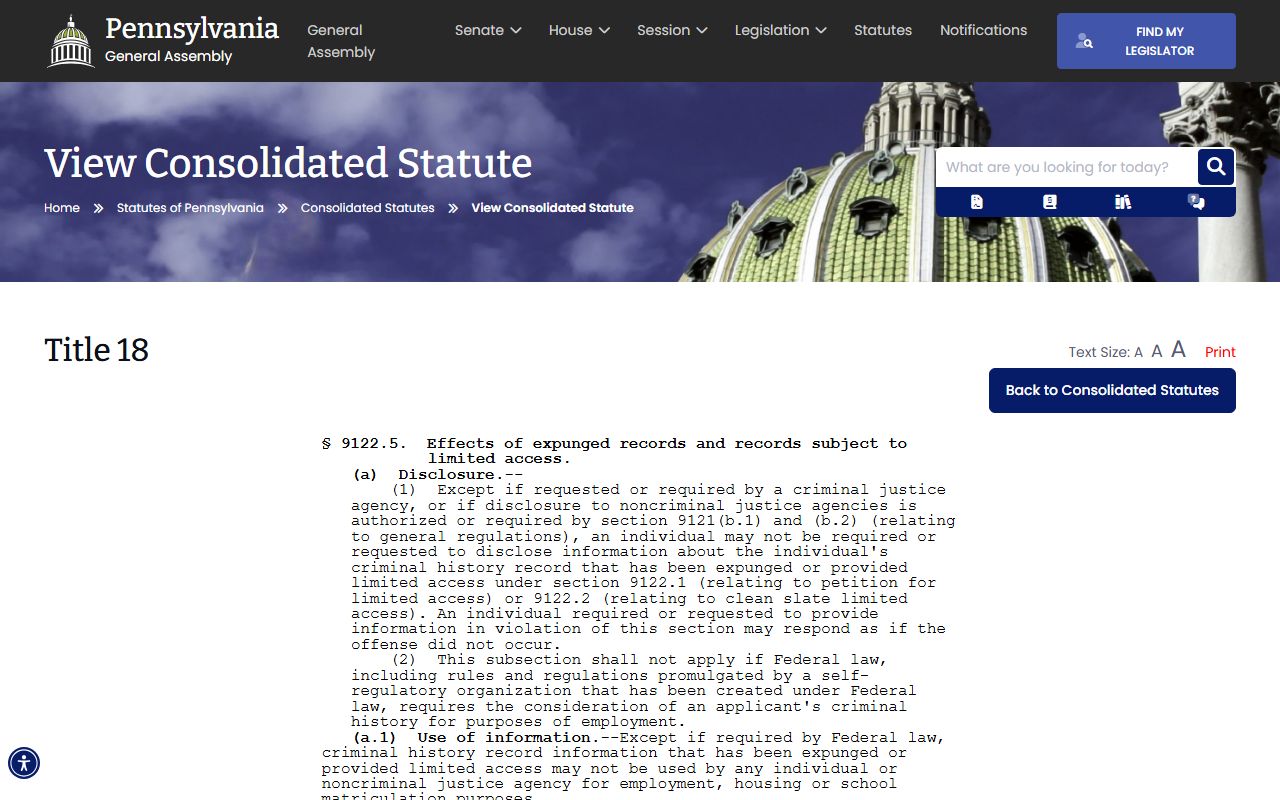
Do not assume a missing public record means no arrest or charge ever existed.
Victim Witness and Case Help
Victim-related case information may involve the Union County Victim Witness office. The research lists Vicki Hackenburg as Coordinator, with courthouse office hours and phone contact. Victim Witness is not a public arrest database, but it is a local court-related office for people connected to criminal cases.
The Victim Witness page is the local source for that support office.
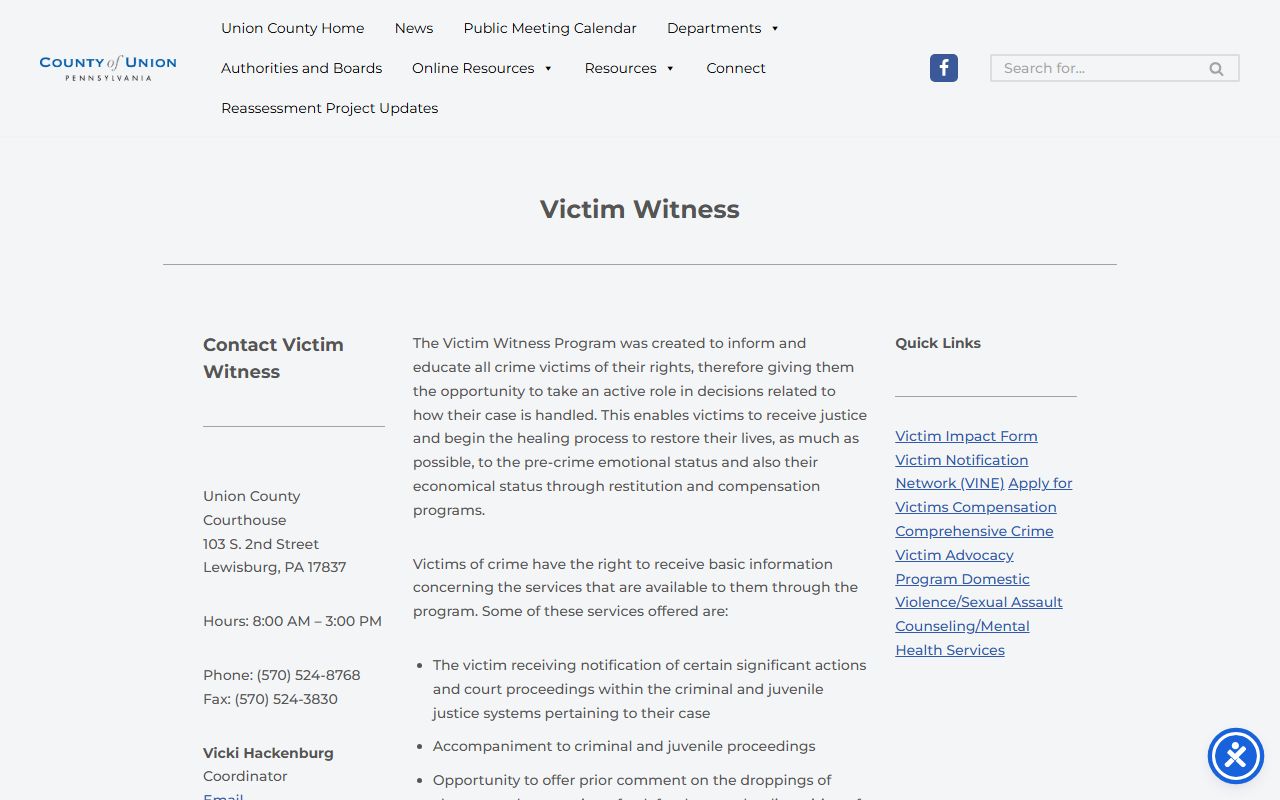
That office context is separate from docket lookup, but it belongs in the local arrest-to-charge pathway.
Statewide Criminal History Limits
Pennsylvania criminal history record information is governed by CHRIA, including 18 Pa.C.S. Section 9121. UJS docket sheets can show court events, charges, and dispositions, but they are not Pennsylvania State Police certified criminal history checks. For employment, licensing, housing, or other regulated screening, a docket lookup should not be treated as a consumer report or a substitute for the official process.
Important: Public charge lookup can omit restricted, expunged, sealed, juvenile, or non-public investigative material.